2642 Liruma Rd #1, Mississauga, ON L5K 1Z1, Canada
Welcome to Liruma Rehabilitation Centre
-
Call for help: 905-823-6256
-

Best Rehab and Physiotheraphy Clinic in Mississauga. Offering best and expert physiotherapy, chiropractic, massage therapy in Mississauga.
Welcome to Liruma Rehabilitation Centre
Call for help: 905-823-6256
Living with back pain can make even the simplest parts of your day feel like a battle. You dread putting on your socks in the morning because bending down hurts so much. Also you avoid lifting your kids or your groceries because you know what will happen later. You toss and turn all night looking for a position that does not send a sharp reminder through your spine. It is exhausting, and it wears you down in ways that go way beyond just physical pain. At Liruma Rehabilitation Centre, we see this every day, and we know there is hope for you. One of the most effective tools we use for back pain is something called spinal decompression.
The term spinal decompression sounds fancy and medical, but the idea behind it is actually quite simple. Your spine is made up of small bones stacked on top of each other like building blocks. Between each bone sits a soft, squishy disc that acts as a shock absorber for your whole body. When these discs get injured or just wear down over time, they can bulge out or press on nearby nerves. This pressure on the nerves is what causes that sharp, shooting pain you feel down your leg. Spinal decompression works by gently pulling on your spine to create more space between those bones. This pulling motion takes the pressure off the discs and lets them slowly move back to where they belong.
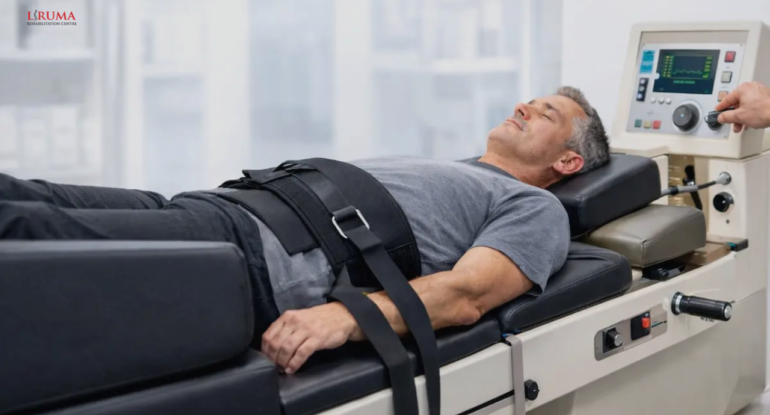
If you have never seen a spinal decompression table before, it might look a little strange at first glance. The table is long and padded, with a moving section that can slide back and forth in a controlled way. You lie down on the table fully clothed, usually on your back or your stomach depending on where your pain lives. The therapist straps a soft harness around your hips and sometimes around your ribcage to hold you in place. Then the table’s moving part slowly pulls away from the fixed part, creating a gentle stretch through your spine. This pull is very slow and controlled, not a sudden jerk or a fast pop like some other treatments. Most sessions last between fifteen and thirty minutes, during which many people actually doze off because it feels so relaxing. After the session, you get up and go about your day with no downtime or recovery needed at all.
Spinal decompression is not right for every single type of back pain, but it helps a great deal with some very common issues. The number one problem we use spinal decompression for is herniated or bulging discs in the lower back. These bulging discs press on the nerves that run down your legs, causing pain, numbness, and tingling. Spinal decompression takes pressure off those discs and gives them room to move back where they belong. It also works very well for degenerative disc disease, which is just a fancy way of saying your discs are wearing thin with age. People with sciatica, that sharp leg pain that shoots from your lower back down to your foot, often find great relief from spinal decompression. Even some cases of spinal stenosis, where the space for your nerves gets too narrow, can improve with this treatment. For folks who have been told their only option is surgery, spinal decompression offers a gentler path to try first.
Just like with most forms of therapy, spinal decompression works best when done in a series over several weeks. Most people start to feel some relief after just three to six sessions, but real, lasting change takes more time. A typical full course of this treatment involves about fifteen to twenty visits spread out over four to six weeks. At the start, you will likely come in three or four times per week while your back is still very sore. As you improve, the visits drop down to two per week, then one per week, then maybe just occasional tune-ups. The effects of spinal decompression build on each other, with each session adding a little more space and a little less pain. Stopping too soon can let your discs settle back into their old, painful positions and undo your progress. Spinal decompression is not a quick fix, but for many people, it is the fix that finally works after nothing else did.
One of the best things about spinal decompression is how well it works alongside other forms of treatment. At Liruma Rehabilitation Centre, we rarely use it all by itself with nothing else added in. The spinal decompression opens up space and takes pressure off your nerves so other treatments can work better. For example, after a spinal decompression session, your muscles are more relaxed and ready for hands-on work. Your physiotherapist might then do some gentle stretching or strengthening exercises that would have hurt too much before. Your chiropractor might find that adjustments hold longer and feel better because the spine is not so compressed. This team approach means you are not just getting one tool, you are getting the whole toolbox. And having more tools means you are more likely to find the combination that finally gets you out of pain for good.
If you have been living with back pain and wondering if there is a better way, we invite you to come see us. At Liruma Rehabilitation Centre, we start every new patient with a thorough assessment to understand exactly what is going on with your spine. We listen to your story, watch how you move, and use our hands to find where the trouble spots are hiding. If spinal decompression seems like a good fit for your specific problem, we will explain why and map out a clear plan. You will not be pushed into a long package or a big payment plan before you even know if it works for you. Many people tell us that spinal decompression gave them their life back after years of just managing their pain. It might not work for everyone, but it works for enough people that it is absolutely worth a try. You have been hurting long enough, and you deserve to find out if this gentle, non-surgical path can help you find the relief you have been looking for.
